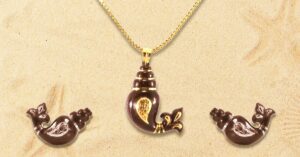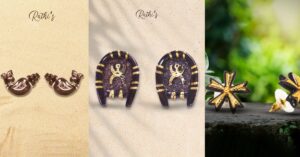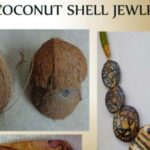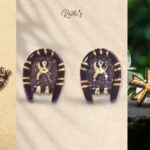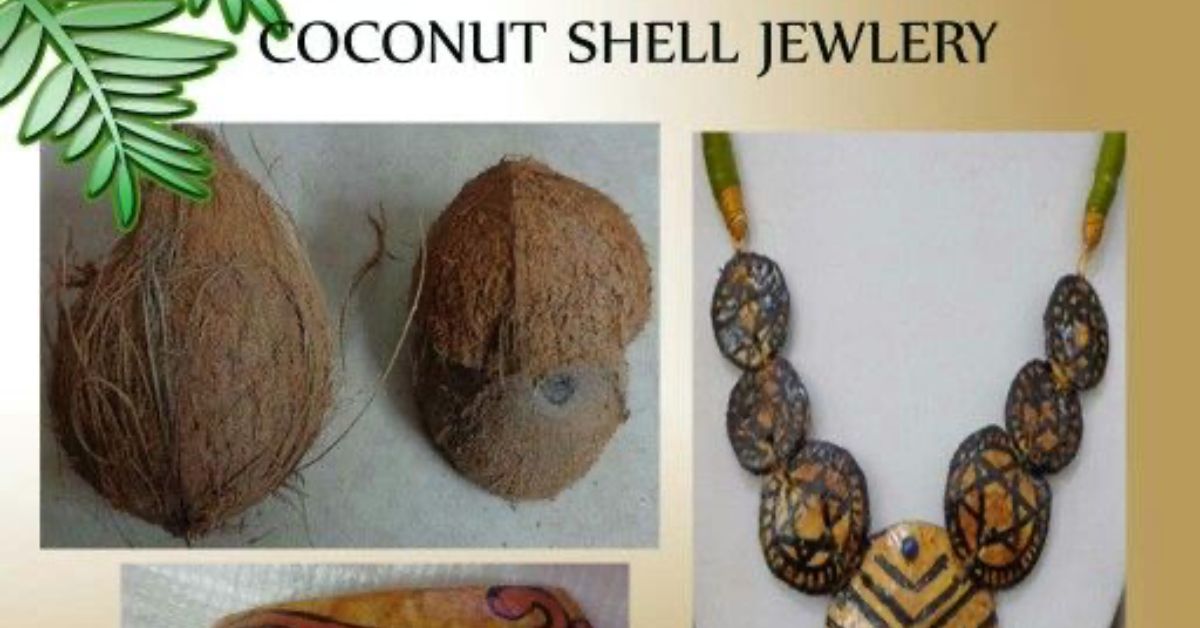
One of nature’s most underrated resources is the coconut shell. It’s dense, has natural patterns and it’s tougher than most people give it credit for. You’d be surprised what you can create when you have all that beauty trapped inside a curved vessel waiting to be embellished. However, turning coconut shells into beautiful pendants and earrings isn’t easy. In fact, it’s a strict, step-by-step process that requires lots of patience.
You might be wondering how on earth a coarse piece of fibrous coconut shell transforms into something so delicate, it can be hung next to a 22K gold pendant or earring. Coconut shells don’t magically become jewellery, they go through a rigorous preparation process. A process that’s been perfected over years. Here, we explain every step of that process right down to the initial selection of the shell.
Why Coconut Shell? Understanding the Material
First let’s talk about why coconut shell have become such a desirable material for jewellery. Wood is porous and will often warp; the inside shell of a mature coconut (technically called the endocarp) however, when properly seasoned, is quite hard and smooth to touch with relatively low levels of moisture permeability. It ranges from dark to dark-brown with small grain patterns on its surface that no two pieces of shell are identical by nature guaranteeing every piece of jewellery made will be unique from others.
The coconut shell itself is also quite light in weight. Ideal for larger statement pieces like pendants or dangling earrings that use a heavier material would simply be uncomfortable to wear. The juxtaposition of coconut shell with metals (particularly the warmth of 22K gold) creates an attractive contrast of organic and luxurious that holds special significance in much of South Asian culture.
Key Properties That Make Coconut Shell Jewellery-Ready
- Hardness: The mature endocarp rivals many hardwoods in density, allowing it to be cut and carved without crumbling.
- Natural pattern: Each shell has a unique grain, ensuring no two pieces are ever identical.
- Lightweight nature: Despite its hardness, finished coconut shell is significantly lighter than stone or metal alternatives.
- Eco-friendliness: Coconut shell jewellery repurposes agricultural byproducts, reducing waste with zero synthetic materials.
- Compatibility with metals: Shell bonds well with gold and silver settings when the right adhesives and mounting techniques are used.
Step-by-Step: How Coconut Shells Are Prepared for Jewellery
The preparation process is methodical. Rushing any stage can result in cracking, warping, or surface imperfections that are impossible to fix once the piece is assembled. Here is the full sequence that skilled artisans follow:
Step 1: Careful Shell Selection
Not every coconut is suitable for jewellery. Artisans specifically seek out mature, fully dried coconuts whose inner shells are thick and crack-free. Young coconuts have a shell that is too thin and brittle. The shell is examined for uniform thickness, absence of natural fissures, and a smooth inner surface. In regions where the craft is traditional, this selection happens right at the source either from local markets or directly from growers who supply shells specifically for artisan use.
Step 2: Removing the Husk and Cleaning
The outer fibrous husk (coir) is first removed completely. Once stripped, the shell is scrubbed vigorously with coarse brushes and water to remove residual coir fibres, coconut meat residue, and any surface contamination. This cleaning step is critical — any organic residue left behind can cause decay or discolouration after the piece is finished.
After washing, the shell halves are left to air-dry completely in a shaded, ventilated space. Direct sunlight drying is avoided at this stage because rapid moisture loss can cause surface cracking before the shell has been properly conditioned.
Step 3: Curing and Conditioning
This is perhaps the most important and most often overlooked stage in coconut shell preparation. Raw shells, even when dried, contain residual moisture within their cellular structure. If this moisture is not properly driven out and stabilised, the finished jewellery piece may contract and crack over time or when exposed to changes in humidity.
Traditional artisans cure coconut shells through slow, controlled drying, sometimes over several weeks. Some use gentle heat exposure in enclosed spaces to gradually equalise the shell’s internal moisture content. More contemporary workshops may use food-grade desiccants or controlled humidity chambers. The end goal is a shell blank that is dimensionally stable and will not shift, warp, or fracture after it has been crafted into a jewellery piece.
Step 4: Cutting and Rough Shaping
Once cured, the shell is cut into workable blanks using fine-toothed saws or jeweller’s cutting discs. The artisan maps out the intended shapes, circular discs for pendants, elongated ovals for earrings, or custom geometric forms directly onto the shell surface before cutting. This mapping accounts for the natural curvature and any minor surface variations in the shell.
Coconut shell is hard enough to require sharp, precise blades. Cuts are made slowly to avoid generating heat that could cause micro-fractures. The rough blanks are then checked again for structural integrity before any further work is done on them.
Step 5: Sanding and Surface Levelling
Raw cut edges are coarse and uneven. A multi-stage sanding process is used beginning with coarser grits (around 80–120 grit) to shape and level the piece, moving progressively through medium grits (220–400), and finishing with ultra-fine grits (800–1200 or higher) to achieve a near-mirror surface. Each sanding stage removes the scratches left by the previous one.
Sanding reveals the shell’s natural inner colour gradient, typically a warm brown at the outer layers transitioning to a darker, richer tone toward the interior. Skilled artisans exploit this gradient intentionally in their designs, allowing the material’s own colouring to become a design element.
Step 6: Carving and Engraving (Where Applicable)
For pieces that feature decorative motifs, floral patterns, geometric lattices, traditional Indian iconography carving is done at this stage using rotary tools fitted with fine engraving bits. The shell is hard enough to hold crisp carved detail without splintering when worked carefully.
Carving is where the artisan’s individual skill becomes most visible. The depth of relief, the precision of edges, and the consistency of repeated motifs across multiple pieces are markers of true mastery. This is the stage that elevates a simple shell blank into a piece of art worthy of pairing with precious metal.
Step 7: Sealing and Finishing
To protect the shell from moisture absorption during wear and to enhance its natural lustre, a finishing treatment is applied. Traditional artisans have historically used natural oils, coconut oil itself, tung oil, or beeswax buffed into the surface to seal the material and develop a rich, warm shine. Modern workshops may supplement this with food-safe lacquers that provide longer-lasting protection without altering the shell’s colour.
Multiple thin coats of finish are applied, each allowed to fully cure before the next. Between coats, the surface is lightly buffed to maintain smoothness. The result is a deep, glowing finish that appears almost polished, a far cry from the raw, dusty shell at the start of the process.
Step 8: Setting and Assembly with Metal
The carved shell piece is now ready to be mounted in its metal framework. In the case of 22K gold – as is the practice of traditional South Indian jewellery craftsmen -the jeweller would hand-make the gold bezel, frame or wire wrap which holds the shell in place. Shell pieces are secured further with jeweller’s epoxy at attachment points, and the finished setting is polished to remove sharp edges and clean gaps.
The completed item is checked for balance, flawlessness of finish, secure stone setting and proper clasp or hook closure before it is declared finished.
Common Challenges in Coconut Shell Jewellery Preparation
The preparation process, while deeply rewarding, is not without its difficulties. Understanding these challenges helps explain why quality coconut shell jewellery made by experienced hands carries genuine value.
- Inconsistent shell thickness: Natural variation means artisans must assess each blank individually. Thin spots can cause breakage during carving or drilling for bail holes.
- Hidden internal cracks: Not all fractures are visible on the surface. A piece may look perfect until carving reveals an internal fissure that renders it unusable.
- Moisture reabsorption: Finished pieces stored in humid environments without proper sealing can slowly reabsorb moisture, leading to dimensional changes that loosen settings.
- Colour variation between batches: Since each shell is a natural product, matching colour and grain across a pair of earrings requires careful selection before cutting begins.
- Tool wear: Coconut shell’s hardness accelerates tool wear. Blades and engraving bits require frequent sharpening or replacement to maintain cut quality.
- Polishing to consistency: Achieving a uniform polish across carved surfaces especially in recessed areas requires time, patience, and experience that cannot be shortcut.
How Rathis Guides You Through the World of Coconut Shell Jewellery
One thing is understanding the preparation process mentioned above. The other is finding jewellery that respects every part of it. Rathis is the culmination of Rathindranath Mallick‘s lifelong journey as a National Award-winning artist twice over. His innovation with coconut shell and 22K gold has found mention in both the Limca Book of Records as well as the India Book of Records.
The process detailed above is not approached as an assembly line with loopholes at Rathis – it’s treated like a labour of love. Every piece of coconut shell jewellery, be it a coconut shell pendant or coconut shell earrings, begins with the same level of careful selection and curing that generations of master artisans have used, only honed further by more than 20 years of experience. When it comes to finding someone reliable to ask about real coconut shell jewellery or how to spot the difference between factory-made fakes and true handcrafted quality, Rathis is one of the few you can actually trust.
Types of Coconut Shell Jewellery and Their Preparation Variants
Different forms of coconut shell jewellery require slight variations in the preparation approach:
- Coconut shell gold pendants: Require thicker blanks with a smooth, flat face for detailed carving or painting, plus a precisely drilled bail hole that does not compromise structural integrity.
- Coconut shell gold earrings: Demand matched pairs — shells selected and cut together to ensure consistent weight, colour, and thickness so that both earrings hang identically.
- Bangles and bracelets: Often require full shell sections curved to the natural shape of the shell, with careful sanding of all edges to prevent skin irritation.
- Inlay pieces: Where shell fragments are set into metal frames, the shell must be cut with extreme precision sometimes to millimetre tolerances to fit the design perfectly.
- Painted shell jewellery: Requires an especially smooth surface finish before painting, as any roughness will prevent pigment from adhering evenly.
Caring for Your Coconut Shell Jewellery After Purchase
Understanding how your coconut shell piece was prepared allows you to best take care of it. As coconut shell is a natural material that has been sealed with oil/mineral lacquer, there are two main enemies to the life of your coconut shell jewellery: prolonged exposure to water and physical knocks.
Avoid wearing coconut shell jewellery while swimming, bathing or washing up. If you store it in a soft pouch away from other jewellery when not wearing it you’ll avoid scratches to the surface finish. An occasional reapplication of a few drops of natural oil – coconut oil or mineral oil – buffed lightly onto the surface will help to keep the shell moisturized and shiny for years of wear.
Crafters at Rathis will often remind customers that a well-prepared piece of coconut shell jewellery can last you 10+ years with proper care. Just goes to show you how important preparation is right at the start of the process 🙂
Conclusion
Crafting coconut shell for jewellery-making purposes is slow work and the artists who work with shell know that trying to rush the job will eventually catch up with you. Selecting, curing, cutting, sanding, carving, finishing and setting; each process affects the next. To skip steps or cut corners won’t just lessen your quality, it will multiply into glaringly obvious faults that no polishing will fix.
For consumers looking to purchase coconut shell jewellery, understanding this process will give you valuable insight into the products you’re considering. Not only will you know which questions to ask and what achievement to look for, you’ll understand the real work that goes into each finished piece.
This timeless craft of bringing such beauty to an otherwise worthless byproduct of agricultural manufacturing will continue to exist as long as there are artists dedicated to showing what can be done with a single shell. If you’re interested in handmade coconut shell jewellery made with 22K gold by a National Award-winning craftsperson, head over to rathis.
Frequently Asked Questions
Is coconut shell jewellery durable enough for daily wear?
Yes, when properly prepared and sealed, coconut shell jewellery is surprisingly durable for everyday use. The key is avoiding prolonged exposure to water and physical impact against hard surfaces. A well-made coconut shell pendant or pair of earrings can last many years with basic care. The durability of any piece is directly tied to the quality of the preparation process it underwent.
Can coconut shell jewellery be worn by people with sensitive skin?
Coconut shell itself is a hypoallergenic natural material and is generally well-tolerated even by people with sensitive skin. The consideration is usually the metal setting silver or gold (as used in 22K gold coconut shell jewellery) is also hypoallergenic. Problems can arise only if a piece uses a chemical coating that contains allergens, which is why naturally finished pieces sealed with oil or beeswax are often recommended for sensitive skin.
What is the difference between coconut shell jewellery and wooden jewellery?
While both are natural materials, coconut shell is significantly harder and denser than most woods used in jewellery making. It has a naturally smoother interior surface that responds better to high-polish finishing. Shell is also less prone to grain-related splitting and tends to hold carved detail more crisply than wood.
How does Rathis ensure the quality of its coconut shell jewellery?
Rathis follows the full traditional preparation process under the direct oversight of Rathindranath Mallick, a two-time National Award-winning artisan recognised by the Limca Book of Records and the India Book of Records. Every piece begins with individually selected, properly cured shells and is finished entirely by hand.