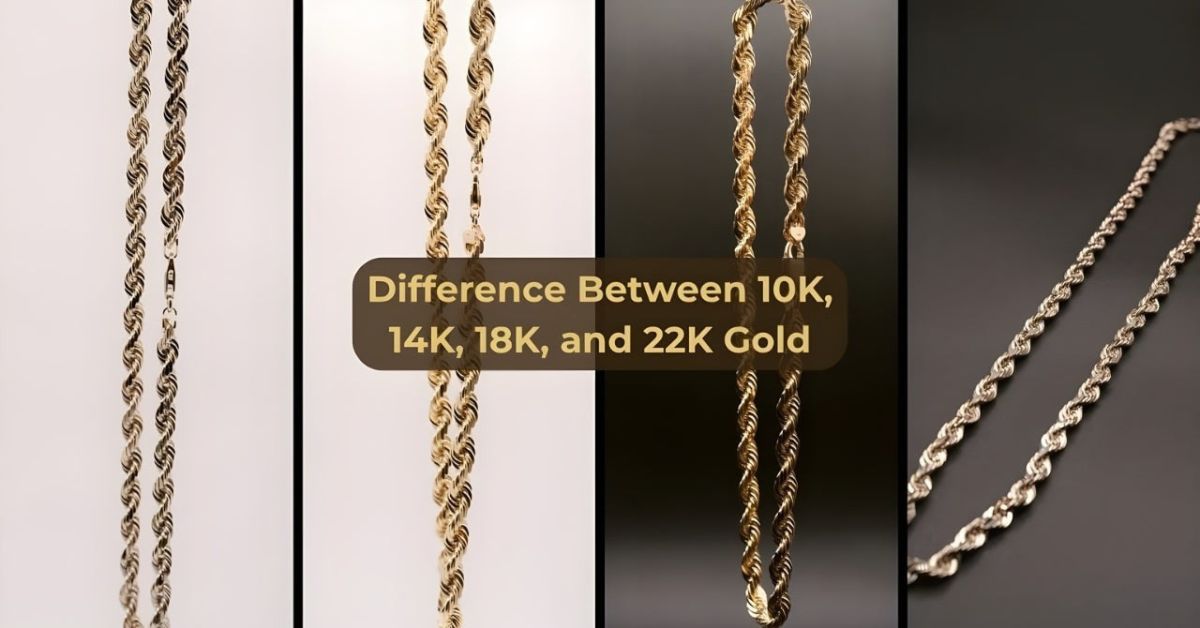
If you’re shopping in a brick-and-mortar jewelry store or scrolling through an online collection, you’ll notice that most gold jewelry has markings like 22K, 18K, or 14K stamped on the bottom. To the average consumer, those numbers are just confusing labels they tend to overlook. But they’re actually the secret to understanding every piece of gold jewelry’s quality, durability, wearability, and value. Whether you’re in the market for a bridal set, an everyday ring, or a timeless piece you can pass down for generations, knowing the difference between 22K, 18K, and 14K gold can help you save money and make a purchase you’ll never regret.
Here’s everything you need to know about 22K, 18K, and 14K gold, from how karats work to which jewelry stands the test of time.
What Does “Karat” Actually Mean?
“Karat” (K) is actually a measure of how much gold there is in an alloy. Twenty-four karat gold is pure gold. Below 24K, you have alloys where other metals have been added such as copper, silver, zinc or palladium. They are not impurities; they are added intentionally to change the colour, hardness and workability of the finished ornament.
Here is the quick mathematical breakdown:
- 24K Gold = 99.9% pure gold (fine gold, rarely used in jewellery)
- 22K Gold = 91.6% pure gold (22 parts gold + 2 parts alloy)
- 18K Gold = 75% pure gold (18 parts gold + 6 parts alloy)
- 14K Gold = 58.3% pure gold (14 parts gold + 10 parts alloy)
22K Gold: The Jewellery Standard of India and Asia
22K gold is hands down the most popular karat when it comes to traditional Indian jewellery. With 91.6% gold content, it hits the sweet spot of providing rich depth of colour whilst maintaining strength. The remaining 8.4% is usually made of silver and copper, allowing for enough durability to shape the metal into fine pieces, without compromising the beautiful warm yellow hue.
Another reason 22K gold dominates the Indian jewellery market is due to its history. Many sets, temple jewellery, necklaces, bangles and earrings made from 22K gold are passed down through family members for generations.
Key characteristics of 22K gold:
- Rich, vivid yellow gold tone closest to pure gold
- Ideal for traditional and bridal jewellery designs
- Higher intrinsic gold value, making it a good long-term investment
- Softer than lower karat golds, so less suitable for everyday rough use
- More expensive per gram due to higher gold content
Artisans who work with 22K gold at a master level are rare. At Rathis, National Award-winning artist Rathindranath Mallick has devoted over two decades to the craft of handmade 22K gold jewellery, pioneering a completely unique approach that fuses pure 22K gold with natural coconut shells — creating ornaments that are both extraordinarily lightweight and uncompromisingly luxurious.
18K Gold: The International Favourite for Fine Jewellery
18K gold hits the perfect Goldilocks zone that many fine jewellery designers around the world swear by. Popular throughout European and Western cultures, 18K gold offers the optimal amount of gold content (75%) to be both durable enough for daily wear and retain that rich warm gold tone we know and love. The remaining alloy content (25%) allows for even more creative freedom amongst jewellers. By changing the ratio of alloys mixed with the gold, white gold, rose gold, and many other varieties of gold can be created that 22K gold simply cannot match.
18K gold is ideal for engagement rings, fine necklaces and chains, watches, and luxury accessories worn daily. The hardness of the alloy also allows diamonds and other precious stones to be set more securely.
Key characteristics of 18K gold:
- Good balance of gold purity and metal hardness
- Available in yellow, white, and rose gold varieties
- Preferred for diamond and gemstone settings
- Slightly less vibrant in colour compared to 22K
- Lower price per gram than 22K due to reduced gold content
- Generally safe for people with mild metal sensitivities
14K Gold: Durable, Affordable, and Built for Daily Wear
14K is by far the most popular karat in the United States. It is rapidly becoming the preferred karat choice worldwide for casual and fashion jewelry. At 58.3% gold content, 14K is also much harder and more scratch resistant than 18K or 22K gold. This property makes it ideal for pieces of jewelry that will take a lot of abuse on a daily basis like bracelets, toe rings, and bangles that you might wear working or working out.
Items made from 14K gold will also usually cost less than higher karat jewelry because there is less gold in them. To the untrained eye, they will look almost identical the first time you see them. However, after a while you may begin to notice that 14K gold looks paler and not as warm as 22K or 18K gold.
Key characteristics of 14K gold:
- Highest durability among the three types
- Most affordable per gram due to lower gold percentage
- Best suited for everyday casual wear and active lifestyles
- Paler colour tone compared to 22K
- Higher alloy content means slightly higher risk of sensitivity for some wearers
- Lower resale and investment value than 22K gold
Side-by-Side Comparison: 22K vs 18K vs 14K Gold
Understanding the differences clearly can help you pick the right gold for your specific need:
• Purity: 22K (91.6%) > 18K (75%) > 14K (58.3%)
• Colour richness: 22K has the deepest, warmest yellow tone; 14K appears the palest
• Durability: 14K is the hardest and most scratch-resistant; 22K is the softest
• Investment value: 22K offers the highest intrinsic value; 14K the lowest
• Best use case: 22K for traditional/bridal; 18K for fine jewellery and gemstones; 14K for casual/daily wear
• Price point: 22K costs most per gram; 14K costs least
How Rathis Helps You Navigate the World of Gold Jewellery
Deciding which purity is right for you can be difficult. Rathis aims to help. Rathis was founded by Rathindranath Mallick – a two-time National Award Winner (Certified by Limca Book of Records and India Book of Records) with over 20 years experience crafting traditional handmade 22K gold jewellery.
Rathis is known for introducing natural coconut shells with 22K gold. Created and refined by Rathindranath Mallick himself, these unique pieces allow you to own jewellery that are ultra-light in weight but still consist of 100% high purity gold. Each piece of jewellery is handmade, making every piece unique to you.
At Rathis, not only do you get a guru to guide your purchase but you can also feel the passion and knowledge that Rathin conducts in his work. Learn more about how gold and jewellery can work for you.
How to Choose the Right Karat for Your Needs
There is no universally ‘correct’ karat — the right choice depends entirely on how and why you are buying gold jewellery. Here is a practical framework:
- For bridal and ceremonial jewellery: Choose 22K. The deep colour, cultural significance, and high gold content make it the natural choice for weddings, religious ceremonies, and heirloom pieces.
- For engagement rings and fine accessories: Choose 18K. It holds gemstones securely, comes in multiple colour options, and offers excellent durability for a ring worn every day.
- For fashion and casual daily wear: Choose 14K. Its superior hardness makes it resilient against scratches and dents from active daily use.
- For investment purposes: Choose 22K. Higher gold content equals higher intrinsic value and better resale prospects.
- For sensitive skin: Choose 22K or nickel-free 18K alloys. The less alloy in the mix, the lower the risk of irritation.
Hallmarking: How to Verify Gold Purity When You Buy
In India, the Bureau of Indian Standards (BIS) hallmarking system is the authoritative way to verify the purity of any gold ornament. Look for the following on a hallmarked piece:
• The BIS logo (a triangle with the letters BIS)
• The purity mark: 916 for 22K, 750 for 18K, 585 for 14K
• The Assaying and Hallmarking Centre mark
• The jeweller’s unique identification mark
Always insist on BIS hallmarked gold when purchasing. This small stamp is your assurance that what is labelled as 22K or 18K has been independently tested and certified.
Final Thoughts
Gold jewellery is an investment, reflection of your culture and style statement. Know the difference between 22K vs 18K vs 14K gold and shop smart next time you buy jewellery. If you are looking for a traditional and luxurious feel of 22K gold jewellery, or trendy yet durable jewellery made of 14K gold or something in between.
We have got you covered! If you are looking for Jewellery where each piece is more than just carat, where it speaks volumes about the artisan behind it, has a rich story ingrained in Indian culture and decades of designing experience we at Rathis is the only answer to your search. Rathindranath Mallick shapes not just 22K gold jewellery but a masterpiece.
Frequently Asked Questions
Can 14K gold be considered ‘real’ gold?
Absolutely. 14K gold contains 58.3% pure gold, which is well above the minimum threshold required for gold to be legally sold as gold in most countries. It is genuine gold — just alloyed with other metals for strength and affordability.
Why does 22K gold jewellery cost more than 18K?
The price of gold jewellery is largely determined by its gold content. Since 22K contains 91.6% gold compared to 18K’s 75%, more actual gold is present per gram of the ornament. This higher gold content directly translates to a higher cost, both at time of purchase and at resale.
What type of gold is best for a diamond engagement ring?
18K gold is generally preferred for diamond settings because it is harder than 22K, which means the prongs and settings holding the diamond are less likely to bend or wear down over time. White 18K gold is particularly popular as a base for diamond rings because it complements the diamond’s brilliance.
Does higher karat gold tarnish more easily?
Gold itself does not tarnish — it is one of the most chemically stable metals. Tarnishing in gold jewellery is actually caused by the alloying metals (like copper or silver) reacting with moisture and air. Paradoxically, higher karat gold like 22K is less likely to tarnish because it contains less reactive alloy. 14K gold, with its higher alloy content, may show slight discolouration over time if not properly cared for.