Have you ever held two pairs of stud earrings next to each other, one handmade, one machine-made and wondered why the handmade ones cost so much more? You’re not alone. Jewellery buyers, gift shoppers, fashionistas, and curious browsers ask this question all the time. So, are handmade stud earrings more expensive than machine-made ones? Short answer: yes. But should they be? And what makes them more expensive?
We’re diving into the details behind handmade versus machine-made stud earrings. From production to materials, artist expertise, rarity, and more. We’ll answer why there’s a price difference and help you decide if it’s worth paying extra. Knowing what goes into handmade jewellery will change the way you look at jewellery altogether.
Understanding the Core Difference: Handmade vs Machine Made Stud Earrings
To better understand why prices vary, let’s first define what we mean by machine made jewellery versus handmade jewellery.
Machine-made stud earrings are created with the use of machines – die casting, laser cutters, electroforming or stamping. This allows for high-volume production (think hundreds to thousands of pieces per day). Machine-made jewellery is faster to produce, has pieces that are identical and because of economies of scale is much cheaper to produce per unit.
Handmade stud earrings are constructed by one or more craftspeople by using hand tools and age-old methods. The metal is shaped by hand, stones are set by hand and the polishing is done by hand. Jewelry artists work with everything from 22K solid gold to wood, coconut shell and even resin or clay. Each piece is one hundred percent handcrafted ensuring that each piece is truly one of a kind even if it’s part of a collection. (The human hand will always leave tiny imperfections that make your jewelry unique.)
Why Handmade Stud Earrings Generally Cost More
Several interconnected factors contribute to the higher price of handmade stud earrings. Here is a breakdown of the most significant ones:
- Labour Time and Skill: A machine can stamp out a pair of stud earrings in seconds. A skilled artisan may spend anywhere from a few hours to several days on a single pair, depending on the complexity of the design.
- Low Production Volume: Machine-made jewellery benefits from economies of scale. When a factory produces 10,000 identical pairs, the fixed costs (design, tooling, marketing) are distributed across all those units.
- Material Selection and Quality: Artisans working by hand tend to be highly selective about the materials they use. Whether it is responsibly sourced 22K gold, hand-picked gemstones, or natural materials like coconut shell or bone, the emphasis is always on quality over quantity.
- Design Originality: Every handmade stud design begins as a concept in the artisan’s mind and is translated into physical form through skill and improvisation. There are no mass-produced templates.
- Finishing and Detail: Machine production is efficient but lacks nuance. Handmade jewellery is finished by hand smoothed, polished, detailed, and inspected at every stage.
- Ethical and Sustainable Practices: Many handmade jewellery makers prioritise sustainability — using recycled metals, natural materials, or traditional techniques that leave a smaller environmental footprint.
Typical Price Ranges: Handmade vs Machine Made Stud Earrings
Price ranges vary enormously based on material, market, and maker reputation. However, some general benchmarks help illustrate the gap:
Machine-Made Stud Earrings
Entry-level machine-made studs in plated metals or alloys typically start from a few hundred rupees and go up to a few thousand. Even machine-made gold studs, produced using casting and automated stone setting, tend to stay in the lower-to-middle range of the gold jewellery market because manufacturing costs are contained.
Handmade Stud Earrings
Handmade stud earrings in precious metals begin at a higher baseline and can extend into the tens of thousands of rupees for artisan-crafted 22K gold pieces with natural materials or rare stone settings. However, it is important to note that handmade does not always mean unaffordable, there is a wide spectrum. Some artisans working in silver, brass, or recycled metals produce beautiful handmade studs at accessible price points.
For example, handmade stud earrings that fuse natural coconut shell with 22K gold, a rare artisan tradition, represent a category where the price reflects both precious metal value and the extraordinary skill and time involved in their creation. Such pieces are genuinely incomparable to anything produced by machine.
Factors That Affect the Price of Handmade Stud Earrings Specifically
Not all handmade stud earrings are priced the same way. Within the handmade category, several variables determine the final price:
Metal Purity and Weight
The gold, silver, or other metal content of the piece is a major pricing factor. Stud earrings made with 22K or 24K gold carry a premium based purely on material value, in addition to the making charges. The weight of the metal in grams directly affects cost — even a few grams of difference can mean thousands of rupees in price variation.
Nature and Rarity of Incorporated Materials
When stud earrings are made with less common materials found in nature like coconut shell, bone, mother of pearl, unusual stones or hand fired enamel, they will cost more because extra steps are required to prepare the material and special skills are needed to work with it. Coconut shell for example must be dried, cut, shaped, smoothed and sealed before it can be set in gold and all these steps are done by hand.
Artisan Reputation and Awards
Just as you would pay more for a painting by a recognised artist than an anonymous one, handmade jewellery created by award-winning or nationally recognised artisans commands a higher price. The artisan’s reputation is, in part, a quality guarantee — a signal that the work has been evaluated and celebrated by credible institutions.
Design Complexity
A simple handmade gold disc stud will cost less than an intricately carved stud featuring a traditional motif like a shankh, swastika pattern, or floral design that requires detailed hand engraving or carving. The more complex the design, the more time and skill is required, and the higher the price.
How Rathis Helps You Understand the Real Value of Handmade Earrings
Hardly a day goes by when we don’t write about why handmade jewellery is worth the price. When we think about jewellery brands that truly encapsulate what we preach, Rathis comes to mind. Rathis is one of the rare Indian jewellery brands that practises the ancient art of coconut shell and 22K gold fusion — and they’ve been perfecting this craft for over 20 years!
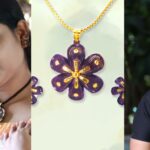
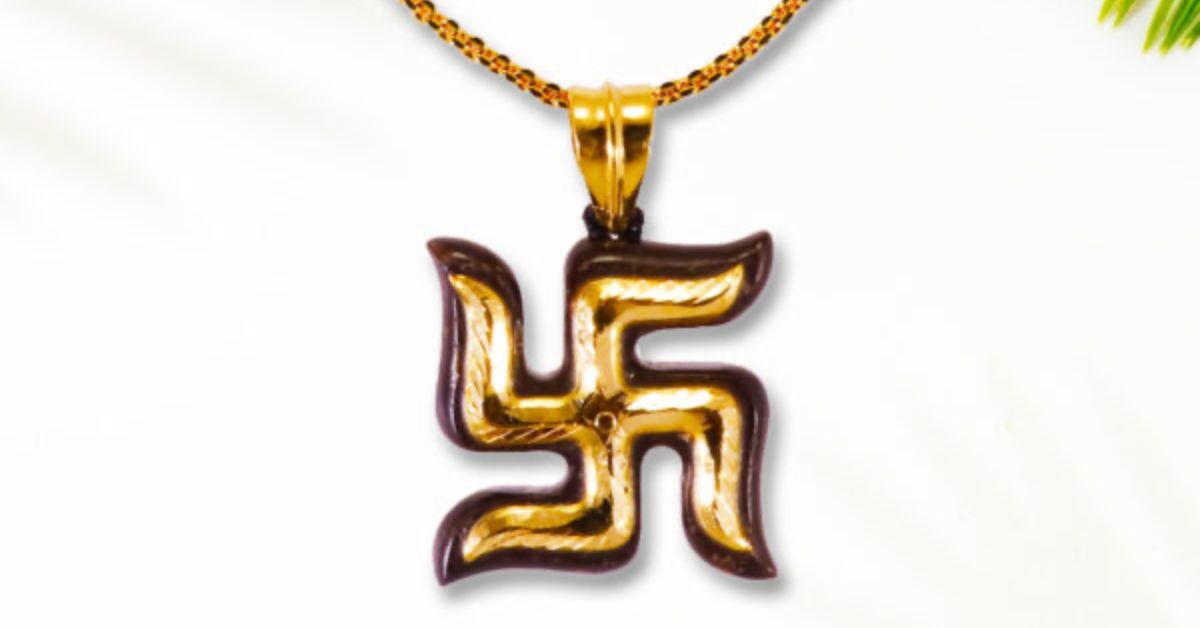
Led by Rathindranath Mallick, a two-time National Award winner (Limca Book of Records and India Book of Records), Rathis creates some of India’s most exquisite handmade jewellery. If you need proof as to why handmade jewellery is priced the way it is, pick any pair of stud earrings from Rathis’ coconut shell collection. The Shankh Shaped Coconut Shell Earrings or Swastika Pattern Coconut Shell Earrings are great examples. A coconut shell is selected, cleaned, cut into shape, and hand-carved into these meticulous shapes. Next, the coconut shell is put into a 22K gold setting by hand, no two earrings will ever be the same!
Handmade earrings like these are unlike machine-made jewellery not because of the coconut shell or the 22K gold, but because of how many years of knowledge went into perfecting that craftsmanship. Additionally, the products use natural materials that simply cannot be duplicated with machines. The detailing on Rathis’ Bakul Flower Design Coconut Shell Earrings or the Shuli Flower Patterns Coconut Shell Earrings, for example, is too detailed and fine to be achieved through machine.
Finally, did we mention that jewellery from Rathis is also not heavy? One of the beauties of coconut shell and gold fusion jewellery is how surprisingly light it is. You’re not slipping on a bulky gold stud but a well-balanced piece of art.
How to Tell If a Handmade Price Is Genuinely Fair
Not every seller who labels their earrings as ‘handmade’ is offering fair pricing. Here are some indicators that help you evaluate whether you are getting genuine value for the premium you are paying:
- Transparency about materials: A genuine handmade jeweller will be able to tell you the exact metal purity, the source of the materials, and the techniques used. Vague answers like ‘gold-toned metal’ are red flags.
- Artisan credentials and recognition: National awards, book of records recognitions, craft board certifications, or documented participation in government-certified craft fairs all indicate that an artisan’s work has been independently verified.
- Visible craftsmanship: Look for small, natural variations in the piece — slight irregularities in texture, hand-engraved lines that are not perfectly uniform, or organic material inclusions. These are signs of genuine hand production.
- Making charges breakdown: Reputable handmade jewellers can separate the metal cost from the making charges (also called labour charges). A high making-charge-to-metal ratio is expected and justified for intricate handmade work.
- Limited availability: Mass production means unlimited stock. Handmade pieces are typically available in limited quantities. If a seller has thousands of units of the same handmade stud earring, that is worth questioning.
Conclusion
Will handmade stud earrings cost me more than machine made ones? Yes. Yes they will. And for good reasons too. That price difference is not arbitrary. It accounts for the maker’s time, skill and years of training to hone that skill; the better materials used and higher purity of those materials; the uniqueness of a piece that cannot be duplicated exactly; and finally the longevity that only solid precious metal jewellery and true craftsmanship can provide.
Price does not equal value. Sure you can get a pair of machine made gold plated studs for a tiny fraction of what you would pay for handmade 22K gold studs, but 5 years down the line (or 10, or 20) you will still have the handmade piece. It will maintain its value, finish, wearability and story. The cheap pair will probably have been tossed long ago.
When you buy something handmade you’re not just buying a piece of jewellery, you’re buying a story, you’re investing in a relationship with the maker and you’re buying something that will have meaning to you that goes beyond the materials used to create it. Now that is value.
Frequently Asked Questions
Are handmade stud earrings better quality than machine-made ones?
In most cases, yes particularly in terms of material quality, finish detail, and durability. Handmade jewellery artisans tend to use higher-grade materials and apply a level of hand finishing that machines cannot replicate for complex or delicate designs. However, for very simple stud designs in standard metals, high-quality machine production can achieve comparable results at a lower cost.
Can handmade stud earrings be lightweight despite being made of gold?
Absolutely. Skilled artisans have developed techniques that allow them to create visually substantial earrings that are physically very light. One approach is the fusion of natural materials with precious metals — for example, using coconut shell as the primary body of the earring and adding 22K gold as a structural and decorative element.
How do I verify that stud earrings are genuinely handmade and not machine-made?
Look for minor natural variations in the piece, slight differences in texture, organic material grain, or hand-finished surface that machines cannot produce. Ask the seller to explain the making process in detail. Reputable handmade jewellers can walk you through the creation steps, name the tools used, and often share images or videos of the process.
Is it worth paying more for handmade stud earrings as a gift?
For a meaningful, long-lasting gift particularly for significant occasions like weddings, milestone birthdays, or anniversaries, handmade stud earrings offer far greater emotional and material value than machine-made alternatives. The uniqueness, craftsmanship, and story behind a handmade piece make it a gift that stands apart.